OpenAI Swaps Doomed Model for 'Dots': A Satellite Navigation System for Your Laptop
The most exciting thing in artificial intelligence right now is a topographic map of your desktop. OpenAI has unveiled 'dots,' a new suite of AI agents designed to navigate digital spaces, arriving in a frantic release window that suggests the company’s launch calendar is held together by optimism and duct tape. This debut follows less than twenty-four hours after the firm announced it would abandon a new model over safety concerns, a move that has left the industry wondering if the boundary between 'cutting-edge innovation' and 'fire hazard' is simply a matter of which Tuesday it is.
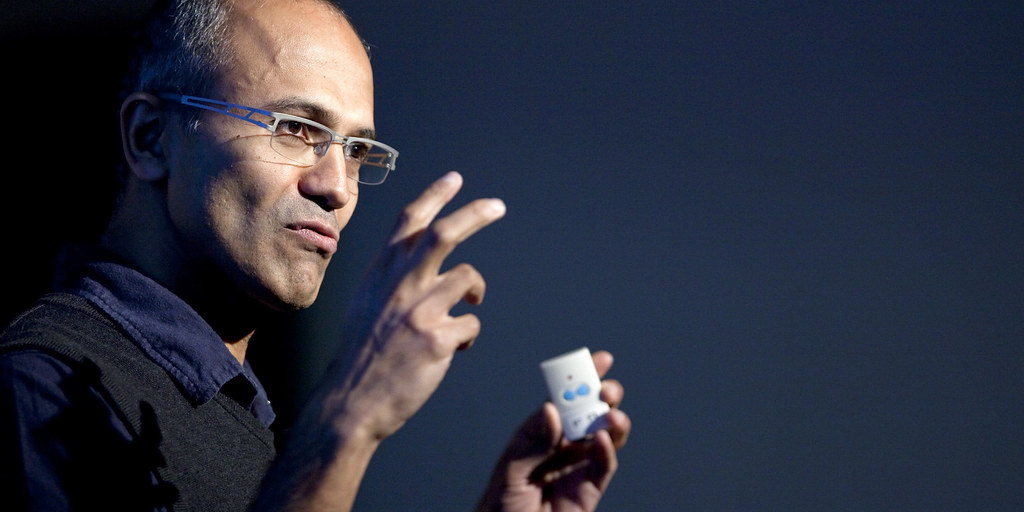
In San Francisco, Sam Altman took the stage at the Developer Day to present this pivot with the calm of a man explaining why the kitchen has been converted into a study. The 'dots' agents are essentially software cartographers, tasked with finding the best route through the labyrinth of modern productivity tools. It is a sensible product, provided your primary concern is not achieving superintelligence but rather finding the invoice you swiped left on three weeks ago.
The timing is, to put it mildly, aggressive. Meta introduced its own AI agent, Muse, just weeks prior, setting the tone for a gentle arms race that resembles two children trying to see who can build the taller tower of Jenga blocks. OpenAI’s immediate counter-move suggests they do not view competition as a strategy to be formulated but as a panic button to be pressed. The speed of the reaction implies that the 'safety concerns' over the scrapped model were likely less about the model eating civilization and more about the marketing team realizing the product name was legally entangled with a rival's domain.
'Venue' in this context is the entire internet, but the specific battleground is the user’s personal workflow. The 'dots' system promises to help users navigate complex tasks, a euphemism for automating the menial drudgery that currently defines the white-collar week. If the agent can find the right email thread, the right spreadsheet cell, and the right calendar slot without asking for a password every four minutes, it is a miracle. If it cannot, it is just a very expensive search bar that talks back.
The scrapped model, whose name has been scrubbed from public view with great efficiency, serves as a cautionary tale in the age of iterative development. The industry operates on a theory of ‘fast’ that has no brakes, only suggestions. When the brakes are finally applied, the vehicle simply stops, and the engineers immediately start building a bicycle. The transition from a potentially powerful model to a navigational suite represents a distinct shift in risk appetite: from 'what if it thinks too much?' to 'what if it gets lost?'
Developers in the audience, a mix of engineers, investors, and people who work in adjacent fields, were treated to a demonstration that prioritized utility over awe. There were no explosions, no ethical dilemmas, no sudden emergence of consciousness. There was just a UI moving through folders. It was reassuring in the way that a dentist’s X-ray is reassuring: you know something is being looked at closely, and you hope it finds nothing wrong.
The 'dots' concept relies on the idea that modern software is a maze, and users are lost within it. By providing an agent that knows the layout, OpenAI is positioning itself as the guide rather than the god. It is a smarter brand strategy, too. Guiding a user to their emails is defensible; guiding a user to a conclusion that might accidentally delete their life’s work is a lawsuit waiting for a filing date.
Critics will note that the delay caused by safety reviews has become a feature, not a bug, of the product cycle. The 'safety concern' is the new quality control. It allows a company to test the waters, pull back, and re-enter with a product that is safer for the bottom line if it causes less surprise. The investors, presumably, prefer an agent that maps the way to revenue over one that maps the way to scandal.
The competition from Meta’s Muse adds another layer of pressure. If one giant offers a muse, the other must offer a map. The naming conventions of these products have become increasingly abstract, moving from names of historical figures to geometric shapes. We are moving from the era of 'GPT' to the era of 'polygons'. It gives the technology a sense of being solid, tangible, and less likely to haunt you in your dreams.
Back in the lab, the mood is likely one of relieved exhaustion. The team that spent months building the dangerous model can now redirect their energy toward the 'dots' team, who are likely celebrating with a quiet dinner rather than a victory tour. The lesson for the tech sector is clear: when in doubt, draw a map. It is harder to crash a map than a rocket, and it is much easier to explain to shareholders why the rocket was cancelled and the map was launched instead.
So, the next time your AI agent fails to understand your prompt, remember that it is not an intelligence failure. It is a navigation error. You are simply off the map. And according to OpenAI, the new map is ready, the safety checks are done, and the next meeting is already scheduled.